McKillop Legal Blog

Click here to view previous articles or search for articles of interest in our Blog Archive

Uncollected goods: is possession 9/10 of the law?

If you are a business that cleans or repairs items that are never collected by a customer or if you are a lessor of a commercial property* and a tenant leaves items behind, you may wonder what your rights and obligations are in relation to those uncollected goods.

Is possession 9/10 of the law? Well, sort of. Often it can depend on the terms of trade agreed between the business and the customer (for example a retention of title clause, a lien** or other similar provisions), but assuming it hasn’t been agreed or if there are agreed terms but there is no unpaid account, what is the position?

If there is no contract to govern what happens then the Uncollected Goods Act 1995 (NSW) will likely apply. That Act allows the business holding the goods (bailee) to sell them if they are uncollected by the owner of the goods (bailor) or if the bailee can’t contact the bailor.

How the goods may be disposed of, and what notice needs to be given, depends on their type and value.  For example, if the goods are worth:

  • less than $100, the business owner needs to give the customer 28 days verbal or written notice of an intention to dispose of the goods. If the customer doesn’t respond or collect the goods in that time, the business owner can dispose of them they see fit;
  • more than $100 but less than $500, the business owner needs to give the customer and each other person that claims an interest in the goods 3 months written notice of an intention to dispose of them. If the customer doesn’t respond or collect them within 3 months, the business owner can dispose of them by private sale for ‘fair value’ or public auction;
  • more than $500 but less than $5,000 the business owner needs to give the customer and each other person that claims an interest in the goods 6 months written notice of an intention to dispose of the goods. If the customer doesn’t respond or collect them in the 6 month period, the business owner can dispose of them by public auction provided that the business owner publishes a copy of the notice in a daily newspaper circulating generally throughout NSW at least 28 days before the 6 months notice is to end;
  • more than $5,000, the business owner needs a Court order to dispose of the goods; and
  • Perishable goods are dealt with differently any only require a ‘reasonable’ amount of notice, the length of which depends on the nature and condition of the goods.

What should the notice state?

Broadly speaking, a notice regarding uncollected goods must include:

  • the business name;
  • a description of the goods;
  • an address where the goods can be collected;
  • a statement of any relevant charges (eg freight and storage costs) and if the business is planning to take money out of the sale to cover those charges;
  • a statement that on or after a specified date, the goods will be sold or kept unless they are first collected and the relevant charges are paid.

No profit

When the goods are sold, the bailee can only recover the cost of the original service being provided if unpaid, the costs of the sale and any maintenance, insurance and storage costs. The bailee is not allowed to make a profit on the sale of the uncollected goods.

Any surplus if the bailor can’t be found or won’t take it, must be paid, as unclaimed money, to Revenue NSW. What a pain!

* There is specific legislation relating to the disposal of goods held by a pawnbroker (Pawnbrokers and Second-Hand Dealers Act 1996 (NSW), Part 4, s.30), goods left by a tenant (Residential Tenancies Act 2010 (NSW), Part 6 Division 2) or resident of a retirement village (Retirement Villages Act 1999 (NSW), Part 9, Division 7). Some assets can require additional steps to dispose of such as motor vehicles (for example the Commissioner of Police has issued a certificate stating that the vehicle is not recorded as stolen) and may require a Personal Property Securities Register Search.

** A lien is a common law right to retain possession of an item until an account is paid (such as a mechanics lien to keep a car until the repair bill is paid for), but it can be confirmed in an agreement.

FURTHER INFORMATION

Craig Pryor is principal solicitor at McKillop Legal. For further information in relation to uncollected goods, your rights or obligations under a contract or arrangement or any other commercial law matter, contact Craig Pryor on (02) 9521 2455 or email craig@mckilloplegal.com.au.

This information is general only and is not a substitute for proper legal advice. Please contact McKillop Legal to discuss your needs.


Stay up to date – LinkedIn Facebook Twitter


Coronavirus: Remote witnessing of legal documents

On 22 April 2020, the Electronic Transactions Amendment (COVID-19 Witnessing of Documents) Regulation 2020 (NSW) came into effect.

The effect of the Regulation is that the signing of legal documents in New South Wales such as Wills, Powers of Attorney, Deeds, Agreements, Appointments of Enduring Guardians, Affidavits and Statutory Declarations can be witnessed by audio visual link, rather than having to be physically present, as is normally the case – that is the law (during the COVID-19 pandemic) now allows the remote witnessing of legal documents.

Some documents have other additional requirements, like Wills which require 2 witnesses, not just one, as is provided for in s.6(1)(c) of the Succession Act 2006 (NSW).

Audio visual link includes Zoom, WhatsApp, Skype, HouseParty, FaceTime and the like.

The witness must sign the document either:

  1. by signing a counterpart of the document as soon as practicable after witnessing the signing of the document; or
  2. if the signatory scans and sends a copy of the signed document electronically, the witness may countersign the document as soon as practicable after witnessing the signing of the document.

The witness must endorse the document, or the copy of the document, with a statement that specifies the method used to witness the signing and that the document was witnessed in accordance with the Electronic Transactions Regulation 2017.

All copies of the document should be stored together so they can be read as the one document.

The Regulations do not change what documents may or may not be executed electronically in NSW – only how documents may be witnessed and attested.  The Regulations also do not affect the laws or requirements of any other jurisdiction, including the Commonwealth (such as company execution of documents under the Corporations Act 2001 (Cth).

Under the COVID-19 Legislation Amendment (Emergency Measures) Act 2020 (NSW), the Regulation were to operate for a maximum period of 6 months from 22 April 2020 however, on 18 September 2020, the Stronger Communities Legislation Amendment (COVID-19) Regulation 2020 came into effect such that, among other things, the operation of the electronic witnessing regulations was extended to 31 December 2021.

Similar regulations are in place in the other States and Territories, such as Queensland’s Justice Legislation (COVID-19 Emergency Response – Wills and Enduring Documents) Regulation 2020 (Qld).

FURTHER INFORMATION

For further information in relation to legal issues arising from Coronavirus, if you had previously held off arranging documents such as for your estate planning due to not wanting to attend our office physically due to social distancing concerns or if you need to discuss how to best to arrange signing of documents under the Regulation, please contact us on (02) 9521 2455 or email help@mckilloplegal.com.au.

This information is general only and is not a substitute for proper legal advice.

Please contact McKillop Legal to discuss your legal concerns or objectives.

Stay up to date – LinkedIn Facebook Twitter

Coronavirus: Commercial Tenancies Code

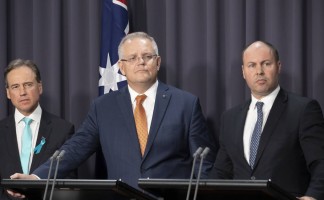
Further to our COVID-19 blogs on the Federal Government led arrangements on employee standdownsnegotiating changes to commercial leases and the JobKeeper subsidy, the National Cabinet on 07 April 2020 agreed on a mandatory Commercial Tenancy Code previously foreshadowed as part of the “hibernation” strategy for Australia’s economy.

“preserve the lease, to preserve the relationship, keeps the tenant in their property and keeps the tenant on the lease, which is also good the the landlord… which underpins the value of those assets

The Code applies to tenancies where either the Lessee/Tenant or the Lessor/Landlord is eligible for the JobKeeper program.

The Code is based on a set of leasing principals intended as the Prime Minister says to operate such that it “preserves the lease, preserves the relationship, keeps the tenant in their property and keeps the tenant on the lease, which is also good the the landlord… that underpins the value of those assets“.

The overarching obligations are for landlords and tenants to work together in an honest, open and transparent manner and to negotiate in good faith on a lease by lease basis so as to mitigate the impact of the Coronavirus on the lease arrangements.

The Leasing Principles themselves include:

  • Landlords must not terminate the lease due to non-payment of rent during the pandemic period*
  • Landlords must not draw on a Tenant’s security (bank guarantee, personal guarantee or cash bond etc) during the pandemic period
  • Tenants must honour the Lease
  • Landlords must reduce rent proportionate to the trading reduction in the Tenant’s business over the course of the pandemic period through a combination of:
    • waivers of rent (accounting for at least 50% of the rental reduction); and
    • deferrals of rent (spread over the remaining time on a Lease and for no less than 24 months)
  • No interest, fees or charged are to be imposed  on the rent waived or deferred
  • Rent increases (other than Retail Leases based on turnover) are frozen during the pandemic period
  • Any statutory or insurance charges passed on to the tenant are to reduced in the appropriate proportion
  • Tenants should have an opportunity to extend the Lease period  of the rent waiver/deferment period
  • A binding mediation process will regulate these co-operative arrangements.

*The pandemic period is from 03 April 2020 and for the period during which the for the period during which the Commonwealth Government’s JobKeeper program remains operational.

To view the Prime Minster’s statement following the National Cabinet meeting here.

The States and Territories will legislate these arrangements as soon as is possible.

Banks are urged to support landlords in a similar manner.

Residential tenancies remain a State and Territory issue, not being determined by the National Cabinet. To register your business’s interest in the JobKeeper system, visit the Australian Taxation Office’s dedicated page.

FURTHER INFORMATION

For further information in relation to legal issues arising from Coronavirus or if you need to discuss how to best deal with commercial tenancy issues, please contact us on (02) 9521 2455 or email help@mckilloplegal.com.au.

This information is general only and is not a substitute for proper legal advice.

Please contact McKillop Legal to discuss your legal concerns or objectives.

Stay up to date – LinkedIn Facebook Twitter

Coronavirus: JobKeeper subsidy

Further to our COVID-19 blogs on employee standdowns and negotiating changes to commercial leases but in this post, the Government on 30 March 2020 announced a $130 billion JobKeeper payment system to help keep more Australians in jobs and support businesses affected by the significant economic impact caused by the Coronavirus. Those workers that are covered by the scheme will receive a fortnightly payment of $1,500 (before tax) through their employer. Employers are to pay their employees and then get reimbursed by the Government later.

The payment is intended to ensure that eligible employers remain connected to their workforce so that businesses are in a position to restart quickly when the pandemic is over.

To get the payments, employers must be eligible and the employees must be eligible.

If your business has been significantly impacted by the Coronavirus (generally able to show a 30% decline in turnover in the relevant month or quarter relative to a year earlier), the business will be able to access a wages subsidy for a maximum of 6 months to assist you to continue paying its employees.

Eligible employees are those who:

  • are currently employed by the eligible employer (including those stood down or re-hired);
  • were employed by the employer at 1 March 2020;
  • are full-time, part-time or a casual employed on a regular basis for longer than 12 months as at 01 March 2020;
  • are at least 16 years of age;
  • are an Australian citizen, the holder of a permanent visa, or a Special Category (Subclass 444) Visa Holder; and
  • are not in receipt of a JobKeeper Payment from another employer.

To register your business’s interest in the JobKeeper system, visit the Australian Taxation Office’s dedicated page.

FURTHER INFORMATION

For further information in relation to legal issues arising from Coronavirus or if you need to discuss how to best deal with employment issues, please contact us on (02) 9521 2455 or email help@mckilloplegal.com.au.

This information is general only and is not a substitute for proper legal advice. Please contact McKillop Legal to discuss your legal concerns or objectives.

Stay up to date – LinkedIn Facebook Twitter

Coronavirus – Negotiating changes to commercial leases

Any businesses that are experiencing a downturn as a result of the current economic crisis that has come as a result of the Coronavirus pandemic will know that one of the largest expenses, apart from that of staff, is its leasing of premises. We have another article on options for employers including standing down its workforce.

The Government has introduced a range of measures to assist businesses and employees with the ongoing payment of wages with the JobKeeper program and the National Cabinet has agreed to implement a moratorium on the eviction of commercial and residential tenants for 6 months. This will be implemented by the States and Territories.

The Government has suggested that commercial leasing arrangements are a matter that ought to be discussed and agreed between lessors and lessees as it is a very complicated area of law that affects businesses from sole traders to multinational corporations. There are many advantages of having these discussions, rather than seeking to strictly enforce the terms of the previously agreed leases, including:

  • The lessor can retain the lessee in the premises – this will be important for them after the pandemic ends
  • The lessee will need to continue trading from the premises – either during the pandemic and/or after the restrictions on movement are relaxed.
  • The lessor may have mortgage repayment obligations to its bank and will need some level of cashflow to assist it to do this

Any  discussions between lessors and lessees should, in the first instance, be informal and without prejudice to the written lease obligations.

There is a moratorium on evictions, but there’s not a moratorium on the requirement to pay rents. Landlords/Lessors and tenants/lessees not significantly affected by COVID-19 are expected to honour their lease and rental agreements.

Every business and each premises is different so there is no ‘one size fits all’ answer but points for negotiation could include:

  • changing the amount of rent to be paid for a period (say a reduction in rent of 25% for 6 months)
  • a rent free period or a reduced rent period (for example 3 months of no rent payable)
  • a delay in payment of the rent (same rent is payable but the obligation to pay is deferred to a later time).
  • extension of the term of the lease to accommodate any rental concessions

Any agreement that may be reached should be documented in writing and signed, and it may be that the lease if registered will also need to have any changed also registered on title.

There may be situations where no negotiated solution will work and parties may need to rely on dispute resolution procedures either now or at the end of the moratorium period, noting that the moratorium does not relieve a lessee from the obligations under the Lease, just that they cannot have the lease terminated during the moratorium period.

FURTHER INFORMATION

For further information in relation to legal issues arising from Coronavirus or if you need to discuss negotiating changes to commercial leases or licensing arrangements, please contact us on (02) 9521 2455 or email help@mckilloplegal.com.au.

This information is general only and is not a substitute for proper legal advice. Please contact McKillop Legal to discuss your legal concerns or objectives.

Stay up to date – LinkedIn Facebook Twitter

Coronavirus: Employees and standdowns

Many businesses are struggling at present with the turndown in sales that are a consequence of the Government’s social distancing rules to help slow down the spread of COVID-19. Those businesses are seeking to minimise costs so as to be able to survive until the Coronavirus heath crisis ends, which appears to be at least 6 months away.

The 2 biggest expenses in business are generally rent and employee/payroll. In another blog post, we discuss how lessors and lessees can negotiate mutually beneficial but generally temporary changes to their commercial leases but in this post, we discuss employee issues.

Options for employers

It is always an option for employers and employees to agree on things such as:

  • working remotely;
  • reduced hours;
  • reduced pay; or
  • taking leave (either accrued or in advance).

Where a business is unable to agree with their staff as to such matters, or if the business needs to significantly and quickly reduce costs or go into hibernation and not just change the way it goes about its business, the first point of reference in relation to the employer/employee relationship is the Employment Contract, followed by any relevant Award. If an Enterprise Bargaining Agreement or EBA applies, then that is the place to look.

Casuals and those on probation are unfortunately the first to be let go as employers seek to minimise costs. This article assumes full time or part time employment.

Often, employment contracts have provisions that allow for the standing down of employees where there is not enough work to keep them engaged.

Assuming there is such a right, then if there is work they can do (even if not their normal role), they can be redeployed but if not, the standdown option generally would be available.

Standdowns are periods where the employment relationship is still in place but there is no payment made by the employer.

So as to keep paying employees at such a time when a standdown is warranted, a business could for example give notice of a requirement to take any accrued annual leave and possibly accrued long service leave. Taking leave in advance is also an option but it does not assist the business as it is still incurring the wage costs and the employees are then in debt to their employer for leave taken but not yet earned.

A benefit to the business of paying out leave entitlements is that this also reduces the businesses’ leave liability in its books (and the benefit to the employee is still getting paid). Note that the payment of leave loading (if leave loading is required by any Award or agreement) is also required when leave is being taken. There is generally no such payment of loading if leave is taken in advance).

Employment contracts or Awards may provided for a period of notice for a standdown but in the absence of that, reasonable notice should suffice.

Where it is not covered in any other document, s.524 of the Fair Work Act 2009 (Cth) can apply. It provides:

(1)  An employer may … stand down an employee during a period in which the employee cannot usefully be employed because of one of the following circumstances:

 …

(c)  a stoppage of work for any cause for which the employer cannot reasonably be held responsible.

Where an employer simply faces a reduction in trade volumes or where it is merely uneconomical to continue to employ staff, it can be a grey area as to whether this is considered a “stoppage” of work for the purposes of the legislation however, where an industry has been shut down as a result of a ministerial direction or public health orders, it will generally be uncontested.

Whilst on stand down:

  • annual leave, personal leave and long service continue to accrue;
  • employees can access personal and carer’s leave (provided they comply with notice and evidence requirements); and
  • employees must be paid for public holidays where it would ordinarily fall on a day they have been stood down.

The main thing to note is that on a standdown, the employees are not being terminated or made redundant – the role is still there, just they can’t be usefully engaged. It may be that termination or redundancy is still an option but it is generally a last resort.

NOTE: Since this blogpost, the Government has announced the JobKeeper subsidy.

FURTHER INFORMATION

For further information in relation to legal issues arising from Coronavirus or if you need to discuss how to best deal with employment issues in light of the current health crisis, please contact us on (02) 9521 2455 or email help@mckilloplegal.com.au.

This information is general only and is not a substitute for proper legal advice. Please contact McKillop Legal to discuss your legal concerns or objectives.

Stay up to date – LinkedIn Facebook Twitter

COVID-19: McKillop Legal remains open for business

McKillop Legal remains open for business and is fully operational despite the significant and unprecedented challenges facing our families, the Australian economy and our way of life as a result of the Coronavirus/COVID-19 pandemic.

We remain open for business and available to provide advice either by telephone, email or other services (and, if necessary, in person, abiding by the Government’s social distancing guidelines).

Our staff all have the ability to work remotely from home or in other places using our secure technology infrastructure and systems.

If you or your business has any legal issue it requires assistance with, whether relating to your rights or responsibilities relating to business, shutdowns or employment in relation to the pandemic or in relation to other matters, please call or email us and we will be in touch promptly.

Take care.

International Wills, what are they?

We often have estate planning clients that hold assets in places other than Australia.

Often, those clients will have a Will in the country that they own property in. Others don’t have a Will there or even plan on going back, so they are unlikely to have a Will drawn up that will meet the requirements of that particular country.

A solution to this, and as a means to prevent the need for having multiple Wills in multiple countries (as it is not uncommon to have an Australian Will to deal with Australian assets only and a Will in another country dealing with assets in that country only), is to put in place what is known as an “International Will”.

The Australian Government acceded to the Convention Providing a Uniform Law on the Form of an International Will 1973, which entered into force for Australia on 10 March 2015 and all states and territories of Australia have passed legislation to give effect to the Convention.

The Convention was developed by the International Institute for the Unification of Private Law (UNIDROIT) to harmonise and simplify proof of formalities for Wills that have international characteristics and resulted in a uniform law introducing the International Will.

An International Will, where signed in accordance with the requirements of the Convention, is recognized as a valid form of Will in all countries that are party to the convention.

They are not for everyone though, and there may be very good reasons for not using an International Will and using a more specific Will in each country.

FURTHER INFORMATION

Craig Pryor is principal solicitor at McKillop Legal. For further information in relation to International Wills, estate planning and dealing with assets outside of Australia, please contact Craig Pryor on (02) 9521 2455 or email craig@mckilloplegal.com.au.

This information is general only and is not a substitute for proper legal advice. Please contact McKillop Legal to discuss your legal concerns or objectives.

Stay up to date – LinkedIn Facebook Twitter


Lost luggage? What are your rights?

For damaged or lost luggage, where your travel is wholly within Australia with no international sectors, airlines are liable to compensate you under the Civil Aviation (Carriers’ Liability) Act 1959 (Cth) (limited to a maximum of $3,000 for registered (checked) baggage and $300 for unchecked baggage).

For those travelling internationally, the rights of passengers for most airlines (carriers) are governed by the Montreal Convention, 1999 (Montreal Convention).

For the Montreal Convention to apply, both the country of departure and country of final destination must both be members. There are 136 countries that are parties.

The Warsaw Convention will generally apply where the Montreal Convention does not, but it is considered less favourable to passengers, especially when it comes to compensation and is based on a $/Kg calculation. This article assumes the Montreal Convention will apply.

Article 17 of the Montreal Convention provides:

“The carrier is liable for damage sustained in case of destruction or loss of, or of damage to, checked baggage upon condition only that the event which caused the destruction, loss or damage took place on board the aircraft or during any period within which the checked baggage was in the charge of the carrier…”

Article 22 of the Montreal Convention states:

“In the carriage of baggage, the liability of the carrier in the case of destruction, loss, damage or delay is limited to 1,000* Special Drawing Rights for each passenger unless the passenger has made, at the time when the checked baggage was handed over to the carrier, a special declaration of interest in delivery at destination and has paid a supplementary sum if the case so requires. In that case the carrier will be liable to pay a sum not exceeding the declared sum, unless it proves that the sum is greater than the passenger’s actual interest in delivery at the destination.”

* adjusted to 1,131 SDR for inflation

So if you are travelling with something worth more than liability limit, you have the option to declare a higher value for your luggage and items when you check your bags at the airport. The carrier can provide you with a higher coverage amount for a fee (as per Article 22). The carrier will be liable to pay that higher amount unless it is proved that the declared amount is greater than the actual value of your baggage.

What is a Special Drawing Right?

A Special Drawing Right (SDR) is a fluctuating index based on a basket of international currencies as determined by the International Monetary Fund.

The SDR rate (as at the date of this article) is 1 SDR : AUD$2.01, so that entitles you to a maximum compensation of $2,273, but that is a maximum only – you will usually only get the replacement value.

If you keep every receipt you ever get, this is the time for you to shine as without receipts, it is difficult to get too much compensation!

What to do if your luggage is lost or damaged

If your luggage is damaged or does not arrive, ideally do not leave the airport. Rather, you should go to the baggage claim office at the destination airport and lodge a Property Irregularity Report (PIR) with the carrier that operated your final flight. Some carriers have time limits on reporting in their conditions of carriage (the terms you agree to when getting your ticket)

Most major airlines are relatively helpful when it comes to lost or damaged luggage, but even if they aren’t and you need to enforce your rights, note that Article 29 of the Montreal Convention provides:

“In … any action for damages … punitive, exemplary or any other non-compensatory damages shall not be recoverable.”

Travel insurance

If there is a shortfall between what the carrier pays you as compensation and what the item is worth, you can lodge a claim for the difference, subject of course to the terms of your travel cover, assuming you took it out.

For those that may not know, many credit card providers offer complimentary travel insurance if you pay an amount towards the costs of the trip on your card.


When is it legal to drive through a red traffic light?

How many times have you been stuck in traffic only to hear an ambulance or police car’s sirens behind you? What should you do? How can you help? When is it legal to drive through a red traffic light? You don’t want to break the law.

Did you know that the law in NSW allows you to drive onto the wrong side of the road or drive through a red traffic light to get out of the way of an emergency vehicle? But only if it is safe to do so. Giving way to emergency vehicles should always be done with the utmost care and with the safety of yourself and all other road users as a priority.

Rule 78 of the NSW Road Rules provides:

“(2)    If a driver is in the path of an approaching police or emergency vehicle that is displaying a flashing blue or red light (whether or not it is also displaying other lights) or sounding an alarm, the driver must move out of the path of the vehicle as soon as the driver can do so safely.

(3)    This rule applies to the driver despite any other rule of these Rules.”

It is also your duty to “give way to a police or emergency vehicle that is displaying a flashing blue or red light (whether or not it is also displaying other lights) or sounding an alarm” (Rule 79).

The NSW Road Rules contain the basic rules of the road for motorists, motorcyclists, cyclists, pedestrians, passengers and others

The NSW Road Rules 2014 can be found here

The road rules applicable in NSW are effectively the same as the model rules proposed by the National Transport Commission but has some additional rules, such as Rule 78-1 (introduced in 01 September 2018) that includes:

“(2) A driver must not drive past, at a speed exceeding 40 kilometres per hour, a stationary emergency response vehicle on a road that is displaying a flashing blue or red light.”

Click here to see our previous blogpost on the top 10 misunderstood road rules

FURTHER INFORMATION

This information is general only and is not a substitute for proper legal advice.

If you have a traffic fine or have been charged with an offence we can refer you to an expert solicitor that acts in relation to police matters, please contact Craig Pryor at McKillop Legal on (02) 9521 2455 or email craig@mckilloplegal.com.au to discuss your needs.

Stay up to date – LinkedIn Facebook Twitter